
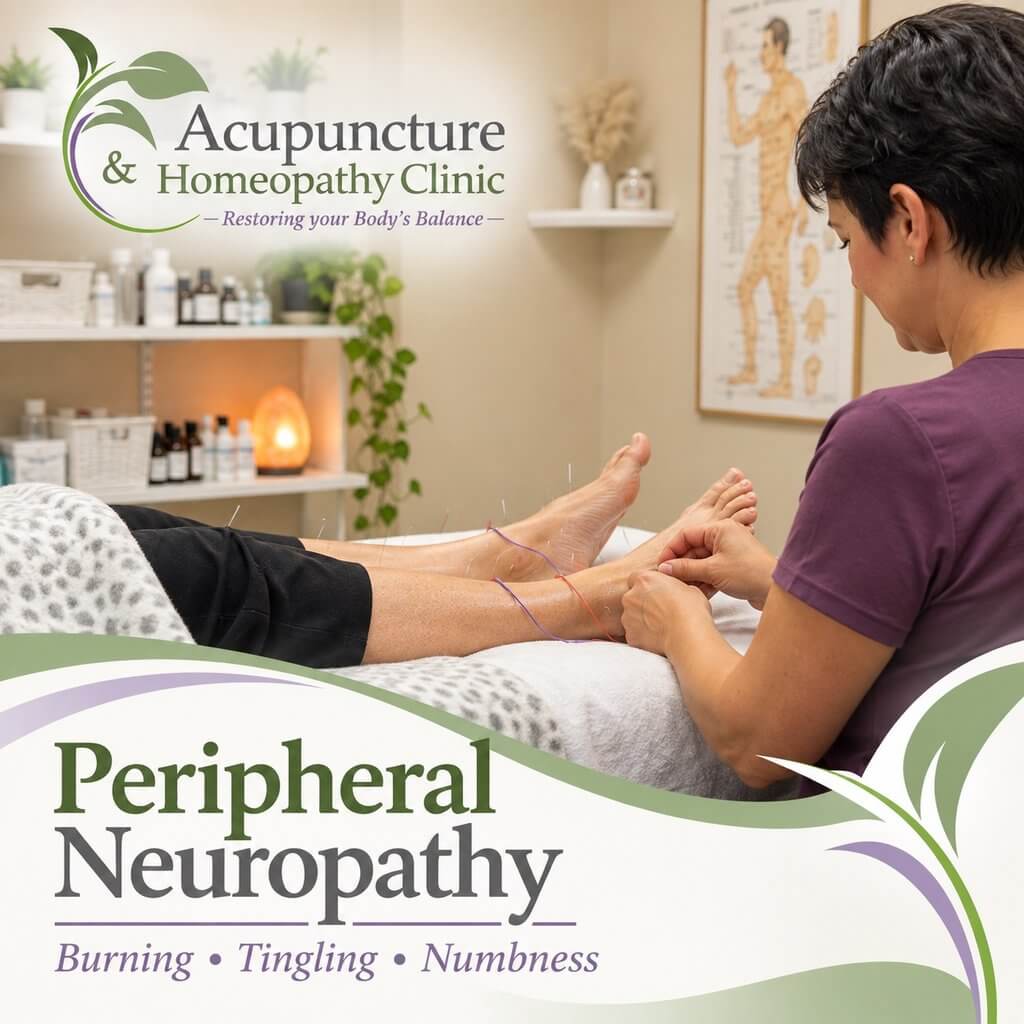
Burning. Tingling. Numbness. Pins and needles. Electric or stabbing pain. Feet that feel strangely cold, hot, sensitive, or sometimes barely there at all.
For people living with peripheral neuropathy, these sensations can become part of everyday life.
Sometimes the discomfort is mild. Sometimes it interferes with sleep, walking, standing, balance, exercise, work, and the simple things people once did without thinking about them.
I have been seeing more patients in my clinic struggling with neuropathy, particularly in the feet and lower legs. One thing I hear repeatedly is:
“I was told I just have to live with it.”
Neuropathy can be complicated, and there is no single treatment that is appropriate for every person. It is also important to understand why neuropathy has developed because treatment of the underlying cause remains an essential part of care.
But managing neuropathy does not always have to end with the diagnosis.
At Acupuncture & Homeopathy Clinic, I take an integrative approach that looks at the nerve symptoms, muscular tension and compensation, movement, comfort, and the patient’s overall health.
The goal is not to make unrealistic promises.
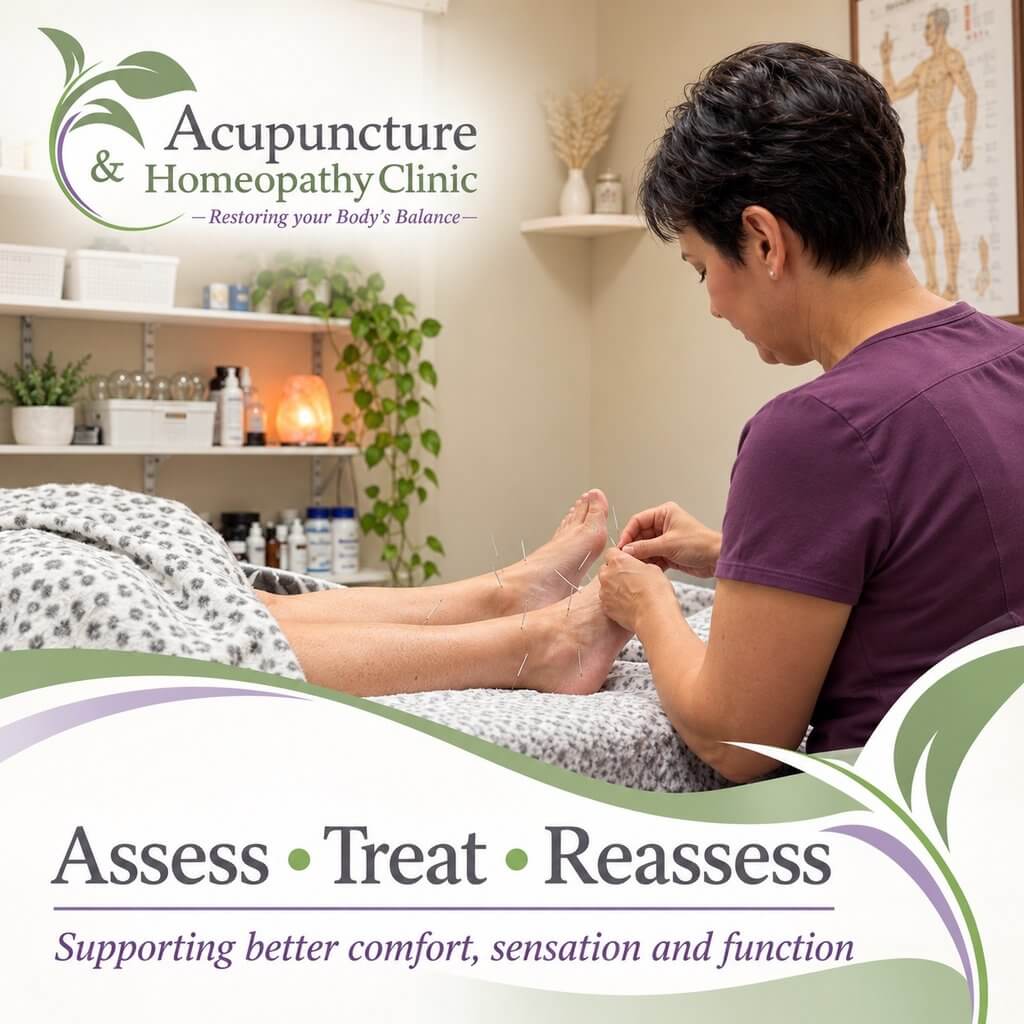
The goal is to assess what is happening, treat the individual rather than simply the diagnosis, and continually reassess whether meaningful changes are occurring.
What Is Peripheral Neuropathy?
Your peripheral nervous system is the communication network connecting your brain and spinal cord to the rest of your body.
These nerves carry information in both directions.
Sensory nerves allow you to feel touch, temperature, vibration and pain. Motor nerves help control your muscles and movement. Autonomic nerves help regulate functions that happen automatically, including blood pressure, digestion and sweating.
Peripheral neuropathy occurs when these nerves become damaged or do not communicate normally.
The National Institute of Neurological Disorders and Stroke explains that neuropathy can disrupt nerve signaling in several ways. A nerve may fail to send a signal, send a signal when it should not, or send an altered message. That helps explain why neuropathy can produce seemingly opposite symptoms, including both excessive pain and loss of sensation.
For many people, symptoms begin in the feet because the longest peripheral nerves are often affected first.
As the condition progresses, symptoms may extend farther up the legs and sometimes into the hands.
What Does Neuropathy Feel Like?
There is no single neuropathy sensation.
Patients may describe:
- Burning in the feet
- Tingling or pins and needles
- Numbness
- Sharp or stabbing pain
- Electrical sensations
- Extreme sensitivity to touch
- Feet that feel unusually hot or cold
- A sensation of wearing socks when barefoot
- Reduced awareness of where the feet are
- Weakness or cramping
- Difficulty balancing
- Pain that becomes worse at night
Some people cannot tolerate a bedsheet touching their feet. Others have very little sensation at all.
That difference matters.
Neuropathy is not simply another form of muscle pain. It involves altered nerve signaling and can affect sensation, movement and, in some cases, automatic body functions.
Why Does Neuropathy Happen?
Diabetes is one of the most common causes of peripheral neuropathy, but it is certainly not the only one.
Neuropathy may also be associated with:
- Chemotherapy
- Vitamin deficiencies or excesses
- Autoimmune disorders
- Kidney or liver disease
- Certain medications
- Infections
- Alcohol exposure
- Trauma or nerve compression
- Circulation problems
- Metabolic disorders
- Inherited neurological conditions
And sometimes, despite appropriate investigation, the precise cause remains unknown.
This is why I do not believe every person who walks into my clinic with tingling feet should automatically be treated exactly the same way.
The symptom is important, but so is the reason behind the symptom.
Someone experiencing new numbness, weakness, significant balance changes or unexplained neuropathy symptoms should have the cause medically evaluated. Early diagnosis can be important, particularly when an underlying condition can be identified and treated.
Neuropathy Affects More Than Nerves
This is an area that I believe deserves more attention.
Suppose someone’s feet hurt every time they walk.
Without consciously deciding to do it, that person may begin changing the way they stand.
They shift their weight.
They shorten their stride.
They protect one side.
They stop pushing normally through the foot.
Perhaps they walk less because walking hurts.
The muscles of the legs, hips and lower back then begin adapting to those changes.
Some muscles work harder. Others may become less active. Tension develops. Opposing and compensating muscles begin pulling against one another differently.
Now there may be two problems occurring at the same time:
The original neurological problem and the musculoskeletal compensation developing around it.
That is one reason my approach to neuropathy is not based on a single treatment.
Acupuncture and Neuropathy
Acupuncture has traditionally been used to stimulate specific points and, within traditional Chinese medicine, to help restore the movement and balance of energy through the body’s channels.
From a modern research perspective, acupuncture is also being studied for its effects on pain processing and neurological symptoms.
A 2025 systematic review and meta-analysis of randomized controlled trials found that acupuncture helps reduce pain and neurological symptom severity in people with diabetic peripheral neuropathy.
That distinction matters to me.
I do not want patients hearing:
“Acupuncture cures neuropathy.”
That is not what the evidence establishes.
What I can say is that acupuncture is a reasonable complementary therapy for some patients experiencing neuropathic symptoms, and the National Institute of Neurological Disorders and Stroke also lists acupuncture among complementary approaches that may help some people manage chronic neuropathic pain.
Electroacupuncture
For many of my neuropathy patients, I also use electroacupuncture.
This is not the same thing as placing adhesive electrical pads on the skin.
I first place acupuncture needles at selected points. Small leads from the electroacupuncture unit are then connected directly to specific acupuncture needles.
A gentle electrical stimulation is delivered through those needles.
The intensity and treatment plan are individualized to the patient.
Electroacupuncture is being studied specifically for painful diabetic peripheral neuropathy. Clinical research has reported encouraging findings, but the overall evidence base still has limitations and should not be interpreted as proof that electroacupuncture repairs damaged nerves.
For me, the important question remains very practical:
Is the patient’s experience changing?
Is the burning decreasing?
Is sleep improving?
Are the feet becoming less sensitive?
Is the patient walking more comfortably?
Those changes are what I continue to watch.
Why I Add Meilus Neuromuscular Therapy
This is where my neuropathy approach becomes somewhat different.
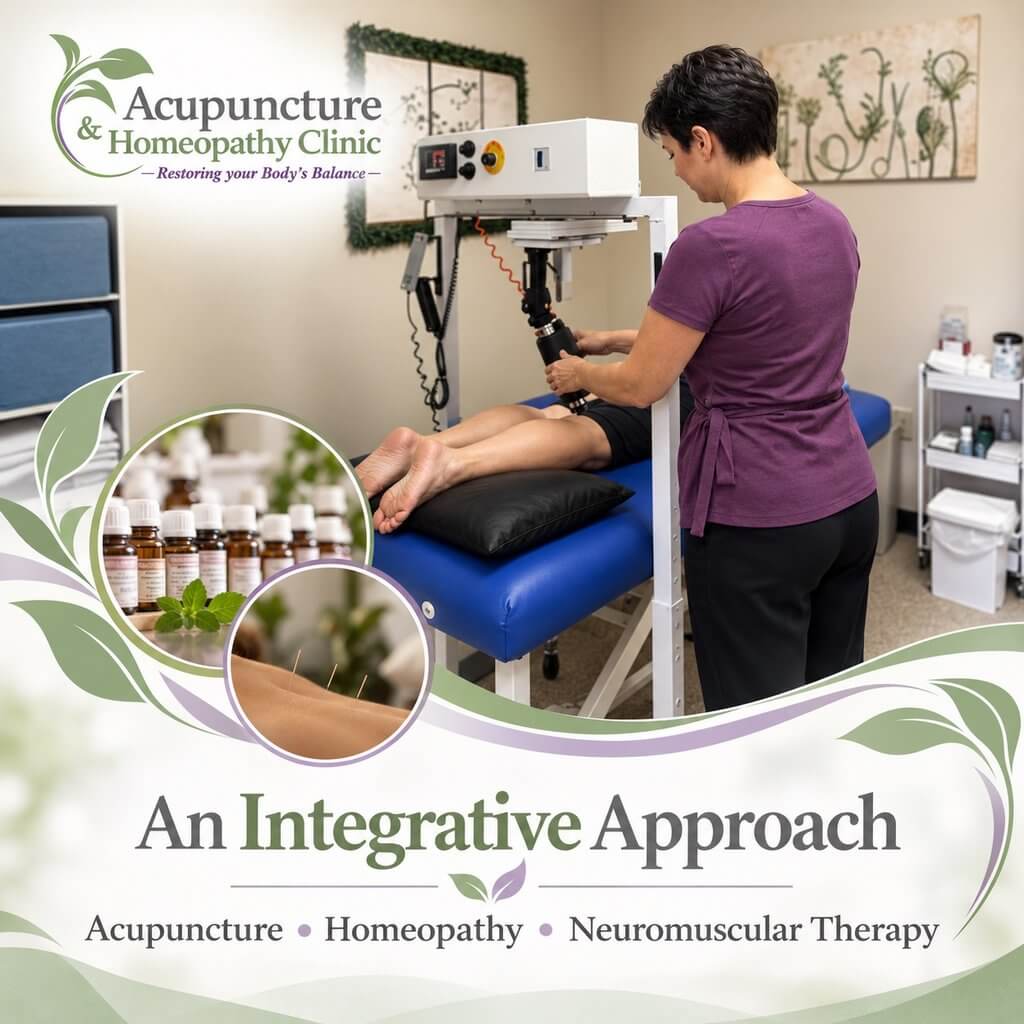
The Meilus Neuromuscular Therapy system allows me to work very specifically with muscles that have become tight, shortened, overworked or involved in compensatory movement patterns.
I do not use Meilus because I believe a machine is somehow “fixing the nerve.”
That would oversimplify neuropathy.
I use it because patients with painful or altered sensation in their feet can change the way they walk and move, and those changes can create significant muscular tension.
Neuromuscular Therapy can help reduce that tension and address the opposing and compensating muscular pull that may have developed.
That can matter enormously to comfort and function.
Sometimes a person focuses entirely on the foot because that is where the burning or numbness exists, while the calf, hamstring, hip or lower back has been compensating for months.
I want to look at the whole pattern.
Better Together
Rather than asking one therapy to accomplish everything, I often combine approaches.
A patient’s treatment might include acupuncture and electroacupuncture to address neuropathic symptoms while Neuromuscular Therapy addresses muscular tension and compensation.
That is the philosophy behind much of what I do:
Different therapies addressing different parts of the same problem.
Acupuncture does not become Neuromuscular Therapy.
Neuromuscular Therapy does not become acupuncture.
They each have a different role.
And when appropriate, they can complement one another.
Homeopathy and Individualized Support
Homeopathy has always been an important part of my practice.
When appropriate, I may incorporate individualized homeopathic remedies or homeopathic injections as complementary components of a patient’s overall treatment plan.
I choose these based on the individual patient rather than using one product or remedy simply because someone carries a neuropathy diagnosis.
Integrative care should mean using different tools thoughtfully, not ignoring conventional medical care.
Assess. Treat. Reassess.
This may be the most important part of my approach.
I do not want someone receiving the same treatment week after week simply because that is what was done at the first appointment.
We need to know whether something is changing.
That means asking questions such as:
Is your burning better, worse or unchanged?
Has the numbness changed?
Are you sleeping longer before your feet wake you?
Can you stand longer?
Can you walk farther?
Do you feel more confident on your feet?
Has your pain level changed?
Sometimes progress is obvious.
Sometimes it is subtle.
A patient may initially say, “I don’t think much has changed.”
Then we discover that the person who could only stand for ten minutes is now standing for twenty-five.
Or the patient who was waking four times every night because of burning feet is waking once.
Those changes matter.
Symptoms are important, but so is function.
That is why my philosophy remains:
Assess. Treat. Reassess.
What Improvement Can Look Like
Every person responds differently, and no responsible treatment can promise a particular result.
For some patients, improvement may mean less pain.
For another, it may mean reduced burning or tingling.
For someone else, the most meaningful change may be:
- Sleeping through more of the night
- Standing longer
- Walking more comfortably
- Feeling steadier
- Tolerating shoes or bedcovers more easily
- Returning to activities they had stopped doing
Those are meaningful changes in quality of life.
And those are exactly the things I want patients to tell me about.
You Still Need to Understand the Cause
Complementary care should never delay appropriate evaluation of new neurological symptoms.
If you develop unexplained numbness, weakness, tingling, significant pain or balance problems, speak with your medical provider.
Neuropathy can have many causes, and some require specific medical treatment.
If diabetes is involved, good glucose management remains important. If a deficiency is involved, it needs to be identified. If medication, compression, autoimmune disease or another condition is contributing, that underlying problem matters.
Treatment should not be about choosing between conventional medicine and complementary care.
Often the better question is:
How can the different parts of healthcare work together for this particular person?
There May Be More to Explore
If you have been living with burning, tingling, numbness or neuropathic pain and feel as though you have run out of options, there may still be additional approaches worth discussing.
At Acupuncture & Homeopathy Clinic, I combine traditional therapies with modern technology and careful reassessment to create an individualized plan.
That may include acupuncture, electroacupuncture, Meilus Neuromuscular Therapy and selected homeopathic support when appropriate.
No two patients are identical, and neither are their treatment plans.
My goal is simple:
Understand what is happening. Address what we can. Measure the changes. And keep looking for meaningful improvement in your daily life.